
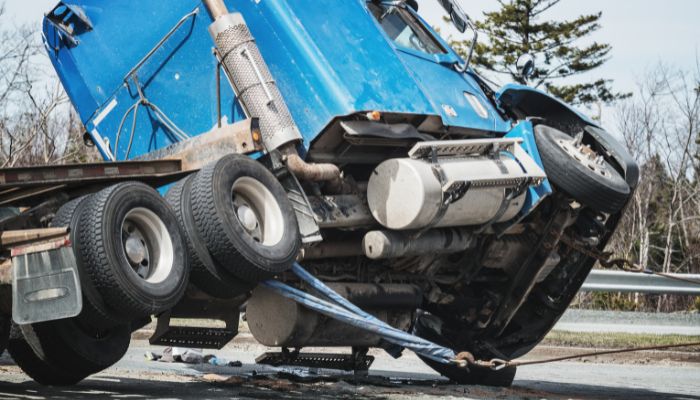
Determining who is liable in a commercial truck accident involves investigating multiple parties beyond just the truck driver. Commercial trucking operations create complex liability chains involving trucking companies, brokers, cargo loaders, maintenance contractors, and vehicle manufacturers. When crashes occur, multiple parties may share responsibility based on their roles in creating the unsafe conditions that led to the collision.
Understanding commercial truck accident liability helps victims recognize their rights to pursue compensation from all responsible parties. These multi-party claims typically provide access to greater compensation because commercial entities carry substantial insurance policies covering their operations.
Key Takeaways About Commercial Truck Accident Liability
- Multiple parties may share liability in commercial truck accidents, including the driver, trucking company, cargo loaders, maintenance contractors, vehicle manufacturers, and freight brokers, depending on specific facts.
- Trucking companies face direct liability for negligent hiring, inadequate training, pressuring drivers to violate safety regulations, and failure to maintain vehicles properly, regardless of independent contractor classifications, when companies exercise operational control.
- Federal Motor Carrier Safety Administration violations under 49 C.F.R. Parts 380-399 provide strong evidence of negligence when regulatory breaches are directly linked to crashes, including new 2025 safety technology requirements.
- Georgia applies modified comparative negligence under O.C.G.A. § 51-12-33, allowing recovery only if you are less than 50% at fault, with remaining liability shared among multiple defendants based on their respective fault percentages.
- Critical evidence, including electronic logging device data and event data recorder information, must be preserved immediately through formal demands.
The Truck Driver's Liability
Truck drivers bear direct responsibility for crashes they cause through negligent operation. However, driver liability represents only one potential source of compensation in commercial truck accidents.
Common Driver Negligence Actions
Driver negligence includes violations of traffic laws and unsafe driving practices. Speeding, following too closely, unsafe lane changes, distracted driving, and failure to yield right-of-way all establish driver fault. Driving while fatigued or under the influence creates particularly strong negligence claims.
Driver-related factors contribute to many commercial truck crashes. Driver error alone, however, rarely tells the complete liability story.
Trucking Company Liability
Trucking companies face multiple pathways to liability beyond simple driver employment relationships. Corporate negligence claims target company policies, practices, and failures that contribute to crashes.
Vicarious Liability and Independent Contractors
Under the respondeat superior principle, employers bear liability for employee actions performed within the scope of employment. When truck drivers operate commercial vehicles as part of their job duties, companies typically share liability for crashes those drivers cause.
Trucking companies sometimes classify drivers as independent contractors to limit liability. However, courts examine the actual control companies exercise over drivers rather than contract labels. When companies dictate routes, set delivery schedules, require specific procedures, maintain dispatch control, or exercise significant operational oversight, independent contractor status may not shield companies from vicarious liability.
Direct Corporate Negligence
Trucking companies also face direct liability for their own negligent actions. Negligent hiring occurs when companies fail to conduct proper background checks, hire drivers with poor safety records, or ignore disqualifying violations. Inadequate training happens when companies put drivers in commercial trucks without proper instruction.
Pressuring drivers to violate hours-of-service regulations or skip required rest breaks constitutes corporate negligence. Failure to maintain vehicles properly under 49 C.F.R. § 396 creates direct liability when maintenance failures cause crashes.
Cargo Loading and Securing Liability
Improperly loaded or secured cargo creates substantial crash risks. Parties responsible for loading cargo may share liability when loading errors contribute to accidents.
Common Loading Violations
Federal cargo securement regulations under 49 C.F.R. § 393 specify how different cargo types must be secured. Common violations that create liability include:
- Overweight loads exceeding legal limits that cause handling problems
- Unbalanced cargo distribution that create vehicle instability
- Insufficient tie-downs that allow dangerous load shifts during transit
- Improper blocking and bracing that fail to prevent cargo movement
When cargo falls from trucks or shifts during transit and causes drivers to lose control, the parties responsible for loading and securing the cargo may face liability. These violations establish negligent loading regardless of driver actions.
Shipper and Broker Liability
Freight brokers arrange transportation between shippers and carriers. Shippers prepare cargo for transport. Both parties may face liability when their actions contribute to crashes.
Brokers face liability for negligent carrier selection, particularly when they hire carriers with poor safety records documented in federal safety databases. Brokers who pressure carriers to meet unrealistic delivery schedules or ignore federal safety requirements create dangerous conditions. As federally regulated entities, brokers bear distinct responsibilities separate from trucking companies.
Shippers who demand overweight loads, provide inaccurate cargo weights, or require loading that violates safety standards contribute to crashes. These actions establish shipper liability independent of driver or carrier fault.
Maintenance Contractor and Manufacturer Liability
Many trucking companies outsource vehicle maintenance to third-party contractors. Separately, vehicle and parts manufacturers face liability when defects contribute to crashes.
Maintenance Contractor Responsibilities
Maintenance contractors bear responsibility for performing repairs competently, conducting proper inspections, and detecting safety defects during service. When contractors miss obvious problems, perform substandard repairs, or fail to replace worn components, their negligence contributes to mechanical-failure crashes.
Documentation of maintenance work, inspection reports, and parts replacement records establish whether contractors fulfilled their duties. This liability is based on negligence—failing to meet professional standards in detecting or repairing defects.
Manufacturer Product Liability
Vehicle and parts manufacturers face strict liability for defects that create unreasonably dangerous conditions. This differs from maintenance contractor negligence liability. Manufacturers may be held liable even without proof of negligence when design defects, manufacturing defects, or inadequate warnings contribute to crashes.
Truck component defects that might lead to crashes include brake system failures, tire tread separations, steering mechanism breaks, and trailer connection failures. When these defects contribute to crashes, manufacturers face liability regardless of maintenance quality. Recent recalls, technical service bulletins, and similar incident reports strengthen defect claims.
Insurance Coverage in Commercial Truck Cases
Multiple liable parties often provide greater compensation due to insurance requirements. Georgia and federal regulations establish minimum coverage levels that vary significantly.
Georgia and Federal Insurance Requirements
Georgia requires commercial trucks operating intrastate to carry minimum liability insurance of at least $100,000 per person and $300,000 per accident for bodily injury. For interstate trucks or those carrying hazardous cargo, federal minimums typically apply and are substantially higher.
Federal regulations require interstate carriers to maintain at least $750,000 in liability coverage, with higher amounts required for hazardous materials transport. These federal minimums often exceed Georgia state requirements, providing greater compensation availability.
Multiple Insurance Policies
Each liable party typically carries separate insurance coverage. The trucking company’s commercial liability policy, the maintenance contractor’s professional liability coverage, the parts manufacturer’s product liability insurance, and the broker’s contingent cargo liability all provide separate compensation sources.
This layered insurance access often means victims recover substantially more in multi-party cases than in single-defendant accidents. Total available coverage might reach multiple millions rather than hundreds of thousands.
How Multiple Parties Share Liability
Potentially Liable Party | Role in Trucking Operation | Common Negligent Actions | Type of Liability |
Truck Driver | Operates the commercial vehicle | Speeding, fatigue, distracted driving, DUI, unsafe lane changes | Direct negligence |
Trucking Company | Employs or controls driver operations | Negligent hiring, inadequate training, pressuring HOS violations, poor vehicle maintenance | Vicarious liability & direct corporate negligence |
Cargo Loader / Loading Company | Loads and secures freight | Overweight loads, unbalanced cargo, insufficient tie-downs, improper blocking | Negligent loading |
Freight Broker | Arranges transportation between shipper and carrier | Negligent carrier selection, ignoring poor safety records, unsafe delivery pressure | Broker negligence |
Shipper | Prepares and tenders cargo for transport | Demanding overweight shipments, providing incorrect cargo weights, unsafe loading demands | Independent shipper negligence |
Maintenance Contractor | Inspects and repairs trucks and trailers | Missed defects, improper repairs, failure to replace worn components | Professional negligence |
Vehicle or Parts Manufacturer | Designs and manufactures truck components | Defective brakes, tires, steering systems, inadequate warnings | Strict product liability |
Commercial truck accidents frequently involve shared liability among several parties. Georgia law allows victims to pursue claims against all responsible parties simultaneously.
Joint and Several Liability Principles
Georgia’s joint and several liability rules allow plaintiffs to recover full damages from any defendant whose fault exceeds the plaintiff’s fault percentage. When multiple defendants share responsibility and any defendant bears greater fault than you, you may pursue damages from that defendant.
Defendants then sort out responsibility among themselves through contribution claims. This system protects victims from shouldering collection burdens when some defendants lack adequate insurance or assets.
Comparative Negligence Application
Georgia’s modified comparative negligence applies to multi-party truck accident cases. You may recover only if you are less than 50% at fault. Your compensation gets reduced proportionally by your fault percentage.
Multiple defendants share the remaining liability based on their respective contributions. For example, the trucking company might bear 40% fault, the driver 30%, and a maintenance contractor 20% while you bear 10% fault. In this example, you recover 90% of your damages, which the defendants share based on their fault proportions.
Critical Evidence in Truck Accident Liability Cases

Proving who is liable in a commercial truck accident requires comprehensive evidence gathering. Different evidence types establish different parties’ liability, and retention periods make immediate preservation critical.
Electronic Logging Device Data
Federal regulations under 49 C.F.R. § 395.8 require electronic logging devices that track driving hours automatically. This data proves whether drivers violated hours-of-service limits through fatigue-related negligence.
ELD data must be retained for only six months. Companies routinely overwrite this evidence without legal obligations to preserve it longer. Immediate preservation demands are critical to secure this evidence before it disappears permanently.
Event Data Recorders
Modern commercial trucks contain event data recorders that capture vehicle speed, braking, engine performance, and other operational data before crashes. This information establishes how vehicles were operated in critical moments.
Data retention periods vary by manufacturer and are often brief—sometimes only weeks. Preservation demands must secure this data immediately. Once overwritten, this objective evidence of vehicle operation is lost permanently.
FMCSA Violation Evidence
Violations of FMCSA regulations provide strong evidence of negligence when directly linked to crashes. New 2025 FMCSA rules incorporate advanced driver-assistance systems requirements and stricter compliance audits. Georgia courts consider these regulatory breaches as evidence of fault when violations contribute to causing accidents.
Maintenance records, driver qualification files, inspection reports, and hours-of-service documentation all establish whether parties complied with federal safety standards. These violations strengthen liability claims against trucking companies, drivers, and contractors.
Protecting Your Rights After a Truck Accident
The actions you take immediately after a commercial truck accident directly impact your ability to prove liability against multiple parties. Once you are home and safe after receiving medical care, focus on protecting your legal rights.
Contact an Attorney Immediately
Commercial truck accident liability cases require immediate legal action because critical evidence disappears within days or weeks. Attorneys send preservation demands to trucking companies, maintenance contractors, parts manufacturers, and freight brokers immediately.
These demands protect electronic logging device data, event data recorder information, maintenance records, and driver qualification files from destruction.
FAQ for Liability in a Commercial Truck Accident
Can I sue both the truck driver and the trucking company?
Yes, you may pursue claims against both the individual driver and the trucking company simultaneously. Drivers face liability for their negligent operation while companies face liability through vicarious liability for employee actions and direct corporate negligence. Multiple defendants with separate insurance policies typically provide greater total compensation.
What if the trucking company claims the driver was an independent contractor?
Independent contractor classification does not automatically shield companies from liability. Courts examine actual control over operations rather than contract labels. When companies dictate routes, set schedules, exercise dispatch control, or maintain significant operational oversight, vicarious liability may apply despite independent contractor status. Your attorney investigates the actual employment relationship.
How long do I have to file a claim after a Georgia truck accident?
Georgia provides two years from the accident date under O.C.G.A. § 9-3-33 to file personal injury lawsuits. However, critical evidence like ELD data disappears within six months and event data recorder information may be lost even sooner. Contact an attorney immediately to preserve evidence.
What if the truck had a tire blowout—who is liable?
Tire blowout liability depends on the cause. The trucking company faces liability if they failed to maintain proper tire pressure or operated on worn tires. The maintenance contractor might be liable if they missed obvious tire defects during inspections. The tire manufacturer faces strict product liability if manufacturing defects caused premature failure. Investigation determines which parties bear responsibility.
How does freight broker liability differ from trucking company liability?
Freight brokers are federally regulated entities with distinct responsibilities from trucking companies. Brokers face liability for negligent carrier selection, particularly hiring carriers with poor federal safety ratings. They may also be liable for pressuring unsafe delivery schedules or failing to verify carrier insurance and safety compliance. Broker liability exists separately from trucking company liability, providing additional compensation sources.
Holding All Responsible Parties Accountable
Jamie Casino Injury Attorneys represents truck accident victims throughout Georgia who need an aggressive investigation to identify all responsible parties. We understand federal trucking regulations, how to preserve critical evidence before retention periods expire, and how to pursue claims against multiple defendants simultaneously.
If you were injured in a commercial truck accident in Savannah, Augusta, or anywhere in Georgia, contact us at (912) 355-1500 for Savannah or (706) 842-3817 for Augusta for a free consultation. We handle truck accident cases on a contingency fee basis—you pay nothing unless we recover compensation. Let us investigate who bears responsibility for your injuries and fight for fair compensation from all liable parties.