
Proving a traumatic brain injury in court requires more than medical records and imaging results. Many people leave the emergency room with CT scans showing no abnormalities, yet continue experiencing significant cognitive, emotional, and physical changes that disrupt their lives. The gap between what standard imaging reveals and what someone actually experiences creates anxiety about whether a legal claim stands any chance of success.
What Evidence Is Used to Prove a Traumatic Brain Injury in Georgia?
Georgia courts recognize that brain injuries often leave no visible trace on conventional scans while still causing profound functional impairment. The evidence that matters most in these cases comes from specialized testing, documented observations from people who know the injured person, and testimony from medical professionals who understand how brain injuries manifest. Building a compelling case means assembling these pieces into a clear picture that juries find credible and persuasive.
Key Takeaways for Proving a Traumatic Brain Injury
- Normal CT and MRI results do not disprove a brain injury, as these tests primarily detect bleeding and structural damage rather than the diffuse cellular injury that causes many TBI symptoms.
- Neuropsychological testing provides objective, standardized measurements of cognitive function that courts rely on heavily when evaluating brain injury claims.
- Testimony from family members, coworkers, and friends documenting personality changes, memory problems, and functional decline often proves more persuasive to juries than medical imaging.
- Under O.C.G.A. § 24-7-702, Georgia courts allow qualified professionals to offer opinions on matters requiring scientific or technical knowledge, including brain injury diagnosis and prognosis.
- Life care planning evidence helps establish the long-term costs and needs associated with brain injury, supporting claims for future damages.
| Type of Evidence | What It Establishes | Why Courts Find It Persuasive |
| CT & MRI Scans | Rules out bleeding, fractures, or major structural damage | Clarifies what imaging does not show and why normal scans do not disprove brain injury |
| Neuropsychological Testing | Objective deficits in memory, attention, processing speed, and executive function | Provides standardized, measurable data that juries view as reliable and difficult to dispute |
| Family & Lay Witness Testimony | Observable changes in personality, memory, and daily functioning | Humanizes the injury and connects cognitive deficits to real-world impact |
| Employment & Performance Records | Decline in job performance, safety issues, or behavioral changes | Documents a clear “before and after” following the injury |
| Medical Expert Testimony | Diagnosis, causation, and long-term prognosis | Meets the requirements of O.C.G.A. § 24-7-702 and explains complex medical issues clearly |
| Life Care Planning Evidence | Future medical, therapeutic, and assistance needs | Translates invisible injury into concrete, quantifiable damages |
| Symptom Journals & Daily Logs | Ongoing and progressive cognitive or emotional symptoms | Establishes consistency over time and supports medical findings |
| Functional Capacity Evidence | Activities and abilities lost after the injury | Demonstrates loss of quality of life in concrete, relatable terms |
Why Emergency Room Scans Often Miss Brain Injuries
The first medical imaging after an accident typically happens in a hospital emergency department. Doctors order CT scans to identify life-threatening conditions that require immediate intervention. These scans excel at detecting skull fractures, brain bleeds, and large areas of swelling. However, they have significant limitations when it comes to the types of injuries that cause lasting cognitive problems.
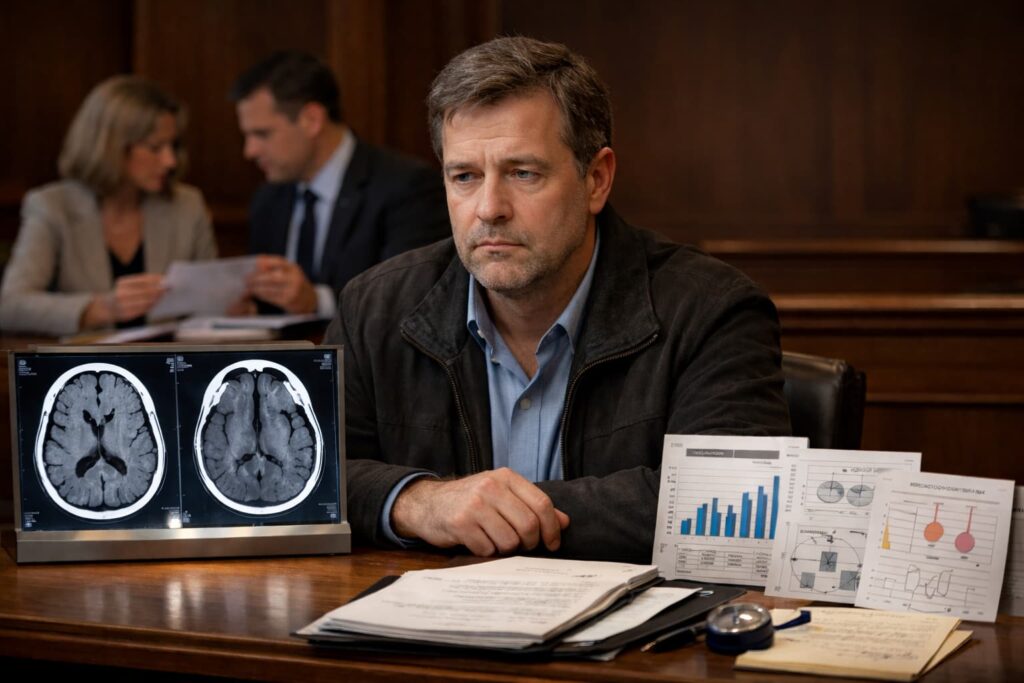
The Limitations of CT and MRI Technology
Standard CT scans create cross-sectional images of the brain using X-rays. They reveal structural abnormalities but cannot detect damage at the cellular level. Many traumatic brain injuries involve diffuse axonal injury, where nerve fibers throughout the brain stretch and tear without creating visible lesions. This microscopic damage disrupts communication between brain regions while appearing normal on conventional imaging.
MRI scans provide more detailed soft tissue images than CT scans. They may reveal smaller areas of damage that CT misses. However, even MRI technology has blind spots when it comes to functional brain injury. The absence of visible abnormalities on either type of scan does not mean the brain is functioning normally.
What Normal Imaging Actually Tells Us
A normal CT or MRI result rules out certain dangerous conditions. It means no significant bleeding, no large areas of dead tissue, and no obvious structural damage requiring surgery. What it does not tell us is whether the billions of neural connections in the brain are working properly.
The CDC recognizes traumatic brain injury as a major public health concern precisely because so many cases go undetected or underdiagnosed. Symptoms may emerge or worsen days after injury, long after initial imaging occurred. Building a legal case means gathering evidence that captures what imaging cannot.
Neuropsychological Testing: The Foundation of Brain Injury Proof
When standard imaging fails to document brain injury, neuropsychological testing provides the objective evidence that courts find compelling. These comprehensive evaluations measure cognitive function across multiple domains, producing standardized scores that reveal deficits even when scans appear normal.
Neuropsychological assessments typically take several hours and involve dozens of individual tests. A qualified neuropsychologist administers and interprets these evaluations, comparing results to established norms for people of similar age and education level. The testing produces numerical data rather than subjective impressions.
What Neuropsychological Tests Measure
These evaluations assess specific cognitive abilities that brain injuries commonly affect. The testing covers several key areas:
- Memory function, including both immediate recall and delayed retrieval of verbal and visual information
- Attention and concentration, measuring the ability to focus and resist distraction over time
- Processing speed, evaluating how quickly the brain handles and responds to information
- Executive function, assessing planning, organization, problem-solving, and impulse control
- Language abilities, including word-finding, comprehension, and verbal fluency
Deficits in any of these areas may indicate brain dysfunction even without abnormal imaging. The standardized nature of neuropsychological testing makes results difficult to dismiss as exaggeration or malingering.
How Courts View Neuropsychological Evidence
Georgia courts regularly admit neuropsychological testing results in brain injury cases. Judges and juries find this evidence persuasive because it provides measurable data rather than purely subjective complaints. When someone scores significantly below expected levels on validated cognitive tests, that deficit becomes difficult to dispute.
Neuropsychologists often testify about their findings, explaining what the scores mean in practical terms. They connect test results to real-world functional limitations, helping juries understand why someone who looks healthy may struggle with work, relationships, and daily activities.
The Power of Before and After Evidence
Some of the most compelling proof of brain injury comes from people who knew the injured person before the accident. Family members, friends, coworkers, and supervisors observe changes that medical tests may not capture. Their testimony creates a human narrative that resonates with juries.
Family Member Observations
Spouses and parents often notice changes first. They see the person every day and recognize when something is different. A wife may describe how her husband now forgets conversations they had hours earlier. A mother might explain that her adult daughter becomes frustrated and angry in situations she previously handled calmly.
These observations carry weight because family members have no financial stake in exaggerating. Their testimony reflects genuine concern about someone they love. Jurors relate to these accounts because they understand family dynamics and what it means when a loved one changes.
Workplace Performance Documentation
Employment records provide objective evidence of cognitive decline. Performance reviews, disciplinary records, productivity data, and supervisor observations all help establish that something changed after the injury. A construction worker who previously received excellent evaluations but now makes repeated safety errors demonstrates functional impairment through documented workplace struggles.
Coworker testimony adds another dimension. Colleagues may describe someone who now asks the same questions repeatedly, misses deadlines, or struggles with tasks they previously handled easily. These observations from people with no family connection to the injured person often prove particularly credible to juries.
Medical Professionals Who Testify in Brain Injury Cases
Building a strong brain injury case typically requires testimony from multiple medical professionals. Each brings different knowledge and perspectives that together create a comprehensive picture of the injury and its effects.
Several types of medical professionals commonly provide testimony in Augusta brain injury litigation:
- Neurologists who diagnose and treat brain injuries, explaining the medical basis for symptoms and prognosis
- Neuropsychologists who administer cognitive testing and interpret results in the context of brain function
- Rehabilitation specialists who work with brain injury patients and understand the challenges of recovery
- Treating physicians who document ongoing symptoms and treatment needs over time
- Radiologists with advanced training who may identify subtle imaging findings that others missed
Each professional contributes different evidence, and their combined testimony often proves more persuasive than any single source alone.
The Role of Life Care Planners
Life care planners assess the long-term needs and costs associated with serious injuries. For brain injury cases, they evaluate what medical care, therapy, assistance, and accommodations someone may require for years or even a lifetime. Their analysis translates ongoing impairment into concrete financial terms.
A life care plan might include projected costs for neurological follow-up, cognitive rehabilitation therapy, psychological counseling, vocational rehabilitation, and home modifications. These documented future needs help juries understand that brain injury costs extend far beyond initial medical bills.
Documenting Daily Life Impact
Beyond formal testing and professional testimony, documenting how brain injury affects everyday activities strengthens your claim significantly. This evidence helps Augusta brain injury lawyers make abstract cognitive deficits concrete and relatable for juries who may struggle to connect test scores to real human experience.
Symptom Journals and Daily Records
Keeping a detailed record of symptoms and difficulties creates valuable evidence. Notes about headaches, memory lapses, confusion episodes, emotional outbursts, and sleep problems establish patterns over time. Dating these entries creates a timeline that connects ongoing symptoms to the original injury.
The best symptom journals include specific incidents rather than general complaints. An entry describing how you got lost driving to a familiar location, or how you forgot to pick up your child from school, illustrates impairment more powerfully than simply noting “memory problems.”
Functional Capacity Evidence
Documenting activities you performed before the injury but struggle with now provides compelling before-and-after evidence. Consider gathering materials such as:
- Photographs or videos showing hobbies, sports, or activities you no longer participate in
- Social media posts from before the injury demonstrating your previous personality and engagement
- Records of volunteer work, club memberships, or community involvement you have abandoned
- Evidence of educational pursuits or professional development activities you cannot continue
This evidence humanizes the claim by showing what the injury has taken away in concrete, relatable terms.
Local Considerations for Augusta Brain Injury Cases
Augusta residents injured on I-20, Bobby Jones Expressway, Gordon Highway, or other local roads often receive initial treatment at Augusta University Medical Center or Wellstar MCG Health. Emergency departments appropriately focus on ruling out immediate threats, but this means brain injury documentation may be limited in early records.
Building Local Medical Evidence
Following up with Augusta-area specialists after emergency treatment helps build stronger documentation. Neurologists and neuropsychologists familiar with brain injury evaluation provide the detailed assessments that insurance companies and juries find credible. The Georgia Brain and Spinal Injury Trust Fund Commission offers resources for Georgia residents navigating life after brain injury.
Local treating physicians who document ongoing symptoms over months create a record showing the injury did not simply resolve. Consistent issues documented by multiple providers strengthen the connection between the accident and lasting impairment.
Overcoming Insurance Company Challenges
Insurance adjusters may challenge brain injury claims by pointing to normal imaging results. They argue that if CT and MRI scans show nothing wrong, the claimed symptoms must be exaggerated or fabricated. Anticipating these challenges helps build evidence that directly addresses them.
The key to overcoming imaging-based challenges lies in presenting alternative evidence that courts accept as reliable. Neuropsychological testing, documented performance changes, and testimony from people who observed the injured person before and after the accident all counter the argument that normal scans disprove injury.
Consistency matters significantly in brain injury cases. When cognitive complaints to doctors match deficits on neuropsychological testing, which match observations from family and coworkers, which match documented workplace struggles, the evidence becomes difficult to dismiss. Each piece reinforces the others, creating a coherent picture of genuine impairment.
FAQ for Proving a Traumatic Brain Injury
How soon after an accident do I need neuropsychological testing?
Testing timing depends on several factors. Some attorneys recommend waiting until symptoms stabilize, while others prefer earlier baseline testing. Most neuropsychological evaluations occur within the first year after injury. Testing too soon may not capture the full extent of permanent deficits, while waiting too long may raise questions about other causes.
What if my symptoms improve over time?
Partial recovery does not eliminate your claim. Georgia law allows compensation for past suffering and limitations even when current function has improved. Documentation of the difficult months or years following injury supports claims for pain, suffering, and lost quality of life during the recovery period.
How do attorneys handle cases where the injured person lacks insight into their deficits?
Anosognosia, or lack of awareness of one’s own impairment, commonly accompanies brain injury. Attorneys rely more heavily on family testimony, workplace documentation, and neuropsychological testing in these cases. The injured person’s inability to recognize their own deficits may itself become evidence of brain dysfunction.
What happens if defense attorneys hire their own neuropsychologist?
Defense neuropsychologists may conduct independent evaluations and offer competing opinions. Your legal team prepares for this by ensuring thorough documentation from multiple sources. When medical records, neuropsychological testing, and lay witness testimony all align, contradicting defense opinions becomes more difficult.
Does previous head injury history affect my current case?
Prior concussions or brain injuries complicate but do not necessarily defeat a claim. Medical literature recognizes that previous brain injuries may increase vulnerability to subsequent injury. Your attorney may argue that the defendant’s negligence aggravated a pre-existing condition, which Georgia law allows as a basis for compensation under the eggshell plaintiff doctrine.
Testing timing depends on several factors. Some attorneys recommend waiting until symptoms stabilize, while others prefer earlier baseline testing. Most neuropsychological evaluations occur within the first year after injury. Testing too soon may not capture the full extent of permanent deficits, while waiting too long may raise questions about other causes.
Partial recovery does not eliminate your claim. Georgia law allows compensation for past suffering and limitations even when current function has improved. Documentation of the difficult months or years following injury supports claims for pain, suffering, and lost quality of life during the recovery period.
Anosognosia, or lack of awareness of one’s own impairment, commonly accompanies brain injury. Attorneys rely more heavily on family testimony, workplace documentation, and neuropsychological testing in these cases. The injured person’s inability to recognize their own deficits may itself become evidence of brain dysfunction.
Defense neuropsychologists may conduct independent evaluations and offer competing opinions. Your legal team prepares for this by ensuring thorough documentation from multiple sources. When medical records, neuropsychological testing, and lay witness testimony all align, contradicting defense opinions becomes more difficult.
Prior concussions or brain injuries complicate but do not necessarily defeat a claim. Medical literature recognizes that previous brain injuries may increase vulnerability to subsequent injury. Your attorney may argue that the defendant’s negligence aggravated a pre-existing condition, which Georgia law allows as a basis for compensation under the eggshell plaintiff doctrine.
Making the Invisible Visible
Brain injuries challenge the legal system because they often leave no outward mark. Someone may look perfectly healthy while struggling with memory, concentration, emotional control, and daily functioning. The evidence gathering process transforms invisible injury into documented reality that courts recognize and respect.
Jamie Casino Injury Attorneys fights for fair compensation for Augusta residents and families throughout Georgia who are dealing with brain injuries that others dismiss or minimize. Our team knows how to assemble the medical evidence, professional testimony, and personal observations that prove these cases. We work with neuropsychologists, neurologists, and life care planners to build compelling presentations for insurance negotiations and courtroom trials.
A free consultation provides an opportunity to discuss your situation and learn how we approach brain injury cases. We handle these claims on a contingency fee basis, meaning you pay nothing unless we recover compensation on your behalf. Contact our team to talk with someone who takes invisible injuries seriously.