


If you ride a motorcycle in Georgia, wearing a helmet isn’t optional. The state has one of the strictest helmet laws in the country that applies to every rider on the road, regardless of age, experience, or how much insurance they carry. Georgia was one of the first states to pass a universal helmet law in 1969, and the law has remained largely unchanged since then.
In addition to the safety benefits, learning about the helmet law matters for legal reasons, too. Whether or not you were wearing a helmet at the time of a motorcycle accident can have a real impact on your ability to recover compensation afterward. Keep reading to learn more.
What Georgia’s Helmet Law Requires
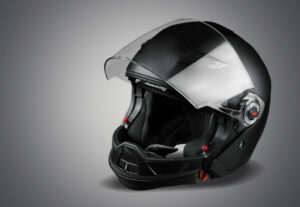
Under O.C.G.A. § 40-6-315, every person operating or riding on a motorcycle in Georgia must wear protective headgear. The helmet has to meet specific safety standards set by the Commissioner of Public Safety, which align with Federal Motor Vehicle Safety Standard No. 218 (FMVSS 218).
In practical terms, that means the helmet must be DOT-approved and capable of absorbing shock, resisting sharp objects, and performing reliably in a crash.
Georgia law also requires riders to wear eye-protective devices unless their motorcycle is equipped with a windshield. That means goggles, a face shield, or safety glasses that meet the standards set by the Commissioner of Public Safety. A full-face helmet with a built-in visor satisfies both the headgear and eye protection requirements.
Passengers are held to the same standards. Anyone riding on the back of a motorcycle in Georgia must also wear an approved helmet and eye protection. On top of that, the motorcycle itself must be designed to carry more than one person in order for a passenger to ride legally.
Exceptions to the Helmet Law
Georgia’s helmet law does have a couple of narrow exceptions. The requirement does not apply to anyone riding inside an enclosed cab or operating a motorized cart. It also does not apply to a person operating a three-wheeled motorcycle that is used strictly for agricultural purposes.
Outside of those specific situations, no exemptions exist. Some states allow riders over a certain age or with particular insurance coverage to go without a helmet, but Georgia does not. The law is universal, as is the state’s stance on licensing for motorcyclists.
Penalties for Riding Without a Helmet
Riding without a helmet in Georgia may be classified as a misdemeanor traffic offense. A conviction can carry a fine of up to $1,000 and up to 12 months in jail, although jail time is rarely imposed for a first violation. The offense also adds one point to the rider’s driving record.
While the criminal penalties may not seem severe, the consequences can become much worse if you’re involved in an accident while riding without a helmet. That’s because helmet use often becomes a central issue in any subsequent injury claim.
How Helmet Use Can Affect Your Injury Claim
Georgia follows a modified comparative negligence law. Under this rule, your compensation in a personal injury case is usually reduced by whatever percentage of fault is assigned to you. If you are found to be 50% or more at fault, you are typically barred from recovering anything at all.
This is where the helmet law becomes important. If you were not wearing a helmet when another driver caused your accident, the defense will almost certainly argue that your injuries were worse than they would have been if you had followed the law. This argument is used to assign you a share of the fault, which can directly cut into the money you can recover.
For example, say your total damages add up to $100,000, and a jury finds you 30% at fault for the severity of your traumatic brain injury because you weren’t wearing a helmet. Your recovery would likely be reduced to $70,000. If that number were pushed to 50% or higher, you might receive nothing.
That said, this argument only holds weight when the injuries in question are related to the head or neck. A skilled motorcycle accident attorney will know how to separate those issues and keep the focus on the other driver’s negligence.
Contact a Georgia Motorcycle Accident Attorney at Jamie Casino Injury Attorneys to Schedule a Free Consultation
Georgia’s helmet law carries more weight than most riders realize, especially when an accident leads to a legal claim. How you handle the aftermath of a crash can shape the outcome of your case in a major way.
If you’ve been involved in a crash, set up a free consultation with a Georgia motorcycle accident lawyer at Jamie Casino Injury Attorneys today. You can learn all about your legal rights and options going forward at that time without any obligations.
For more information, contact Jamie Casino Injury Attorneys at (912) 355-1500 to schedule a free consultation with an experienced personal injury attorney.
Visit Our Personal Injury Law Office in Savannah, GA
480 Mall Blvd, Savannah, GA 31406
(912) 355-1500